

Introduction
The web has changed dramatically since WordPress became the most popular platform for building websites. A traditional WordPress implementation follows a monolithic architecture, where the backend (content management) and frontend (presentation) are hosted and managed together in the same ‘stack’. While this model served more than 40% of worldwide websites well for years, there are scenarios where this approach faces challenges.
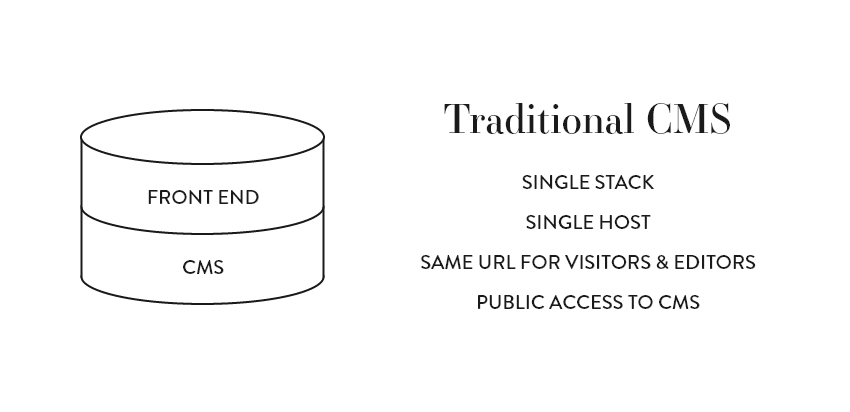
Today, users expect instant-loading pages, and businesses need to deliver content across multiple channels – websites, mobile apps, smart devices, and even kiosks, with the ever-present threat of hostile activity. This push for speed, flexibility, security and multi-channel delivery has driven the rise of headless WordPress, which decouples the CMS from the front-end and uses APIs to serve content anywhere. By leveraging modern frameworks like React or Next.js, developers can create highly optimised, interactive experiences that traditional PHP-based themes struggle to match.
The need for performance and resilience was underscored by the recent Cloudflare outage in November 2025, which disrupted access to major platforms like ChatGPT, X (formerly Twitter), Shopify, and Canva for several hours. Cloudflare, which is behind roughly 20% of global web traffic, experienced a cascading failure that left millions of users facing HTTP errors and businesses without online presence for a few hours. This incident highlights how critical fast, distributed, and fault-tolerant architectures have become. A headless approach, combined with static site generation and global CDN caching, can help mitigate such risks by reducing reliance on single points of failure and ensuring content remains accessible even during infrastructure hiccups.
What is Headless WordPress?
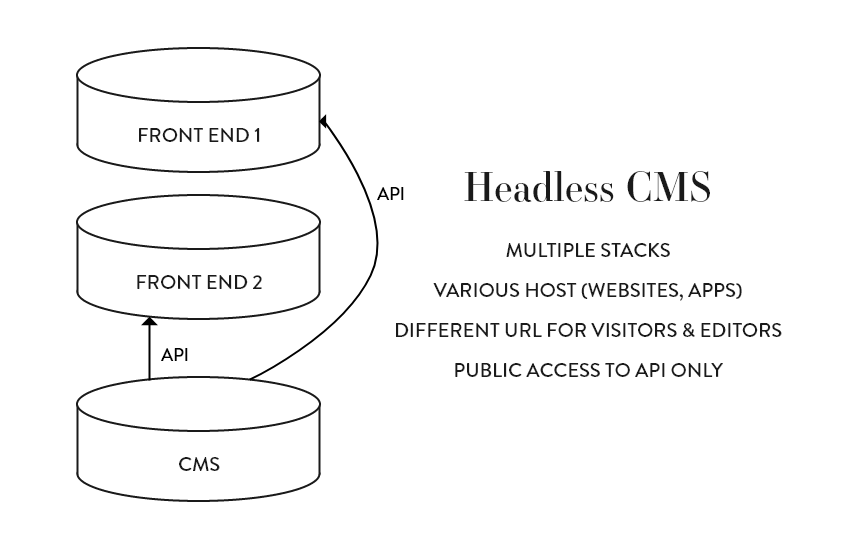
In a headless setup, WordPress serves purely as a content management system, while the front-end is built using modern frameworks like React, Vue, or Next.js. Content is delivered via APIs (REST or GraphQL) to any platform – websites, mobile apps, or even IoT devices. This separation allows developers to create highly customised experiences beyond the limitations of traditional WordPress themes.
Advantages of Headless WordPress
- Performance and Speed: Modern JavaScript frameworks can deliver faster, more optimised experiences compared to PHP-based themes. Techniques like static site generation (SSG) and server-side rendering (SSR) reduce load times and improve user experience.
- Flexibility: Headless architecture allows the use of any technology for the front-end, enabling cutting-edge UI/UX and progressive web apps. Content can be reused across multiple channels, making it ideal for omnichannel strategies.
- Scalability: The front-end can be scaled up independently from the CMS, which is crucial for high-traffic sites or businesses with complex publishing needs, without incurring excessive server fees.
- Security: By isolating the WordPress admin from the public-facing site, the attack vectors are reduced, which improves overall security.
- Developer Experience: Modern frameworks offer better tooling, component-based architecture, and faster development cycles, which developers prefer.
Issues and challenges
- Complexity: Setting up and maintaining a headless system requires more technical expertise, with the need to manage two separate systems: WordPress for content and a front-end framework for presentation.
- Cost: Development and hosting costs are higher compared to traditional WordPress. Ongoing maintenance also demands more resources.
- Plugin Compatibility: Many WordPress plugins are designed for traditional themes and may not work in a headless setup. Custom integrations are often necessary.
- SEO and Caching Challenges: Dynamic rendering can complicate SEO unless properly configured. You’ll need additional custom development for sitemaps, RSS feeds, meta tags, and caching strategies.
- Content Preview: Native WordPress preview functionality does not work out-of-the-box in a headless environment, requiring custom solutions.
Headless or static?
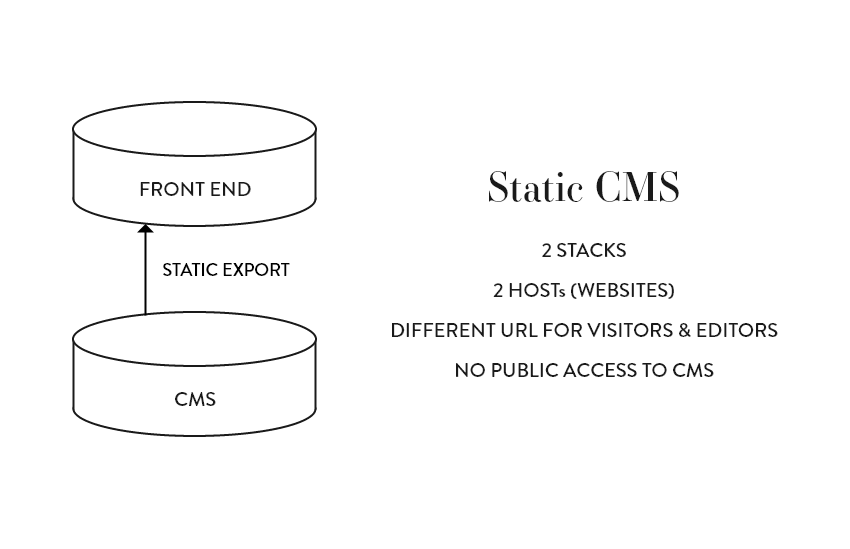
A static WordPress setup refers to converting a dynamic WordPress site into a collection of static HTML files that are served to visitors. Unlike traditional WordPress, which generates pages on the fly using PHP and database queries, a static approach pre-builds the entire site and delivers it as plain HTML, CSS, and JavaScript.
Benefits of a static WordPress site
- Speed: Static files are lightweight and can be cached globally via CDNs.
- Reliability: Fewer moving parts mean fewer chances of downtime.
- Cost Efficiency: Hosting static files is cheaper than running a full WordPress stack. Also, static sites are easier to load balance on multiple hosting providers.
Drawbacks
- Limited Interactivity: Features like comments, user accounts, or dynamic content require third-party services or custom APIs.
- Complex Workflow: Updating content often requires rebuilding and redeploying the site, with an increased lag between change and deployment on larger sites.
- Plugin Limitations: Many WordPress plugins rely on dynamic PHP execution and won’t work in a static environment.
What about Hybrid?
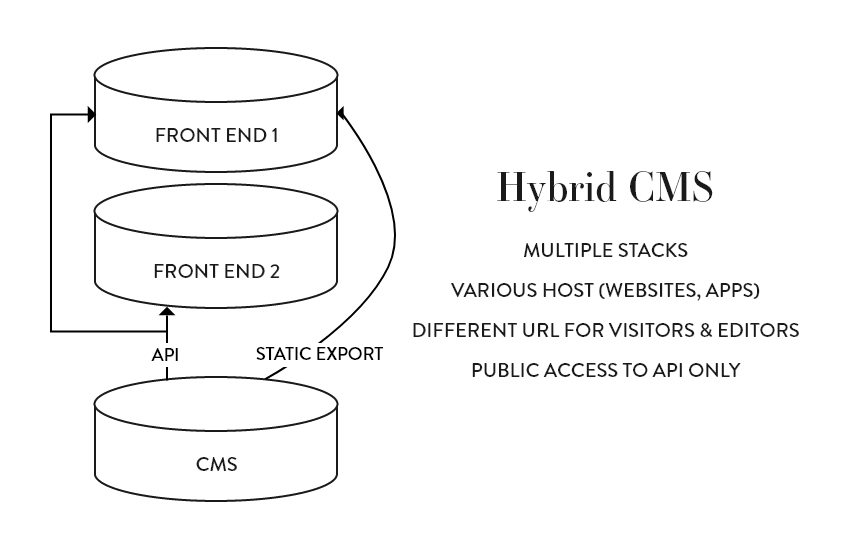
A hybrid headless static WordPress approach combines elements of all three models – traditional, headless, and static – to balance flexibility, performance, and simplicity:
- Headless Component: WordPress acts as the CMS, delivering content via APIs (REST or GraphQL) to a decoupled front-end built with modern frameworks like React or Next.js.
- Static Component: Instead of rendering pages dynamically on every request, the front-end uses Static Site Generation (SSG) to pre-build pages into static HTML, CSS, and JavaScript files.
- Dynamic Enhancements: Certain features (e.g., comments, search, and user accounts) can be added via client-side JavaScript or third-party services, giving the site interactivity without sacrificing speed.
Hybrid is a great choice for:
- Performance: Static generation ensures fast load times and global CDN caching.
- Flexibility: Developers can use modern frameworks for the front-end while leveraging WordPress for content management.
- Security: The public-facing site is static, reducing attack vectors, while WordPress remains behind the scenes.
- Better Workflow: Compared to pure static WordPress, hybrid setups often include incremental builds or on-demand regeneration, making updates easier.
But also keep in mind…
- Complexity: Requires knowledge of both headless architecture and static site generation workflows.
- Cost: Higher than traditional WordPress due to custom development and hosting needs.
- Plugin Limitations: Many WordPress plugins won’t work out of the box; custom integrations or API-based solutions are needed.
When to Use Headless vs Traditional vs Hybrid WordPress
| Scenario / Requirement | Headless WordPress | Traditional WordPress | Hybrid WordPress |
|---|---|---|---|
| Multi-Channel Content Delivery | Ideal for delivering content to web, mobile, IoT via APIs | Limited to web only | Good for web + some API-driven features |
| Cutting-Edge UI/UX | Best choice (React, Vue, Next.js flexibility) | Restricted by PHP themes | Modern front-end with static generation |
| Performance & Speed | High (SSG/SSR optimisations) | Moderate (PHP rendering – mitigated by object caching) | Very high (static pages + dynamic enhancements) |
| SEO Out-of-the-Box | Requires extra configuration | Built-in SEO support | Requires some adjustments |
| Budget-Friendly | Higher cost (custom development) | Most cost-effective | Medium cost |
| Plugin Compatibility | Limited; custom integrations needed | Full compatibility | Partial compatibility |
| Plugin Compatibility | Strong (isolated admin, API-driven) | Standard security | Strong (static front-end + hidden CMS) |
| Team Expertise | Requires strong JS and API knowledge | Easy for non-technical teams | Requires JS + SSG knowledge |
Why choose Zebedee for your WordPress needs
At Zebedee, we don’t just build websites; we craft digital experiences. Whether your business requires a traditional WordPress site, a cutting-edge headless architecture, or a hybrid solution that combines speed and flexibility, Zebedee delivers. Please get in touch to start the conversation.